About Us
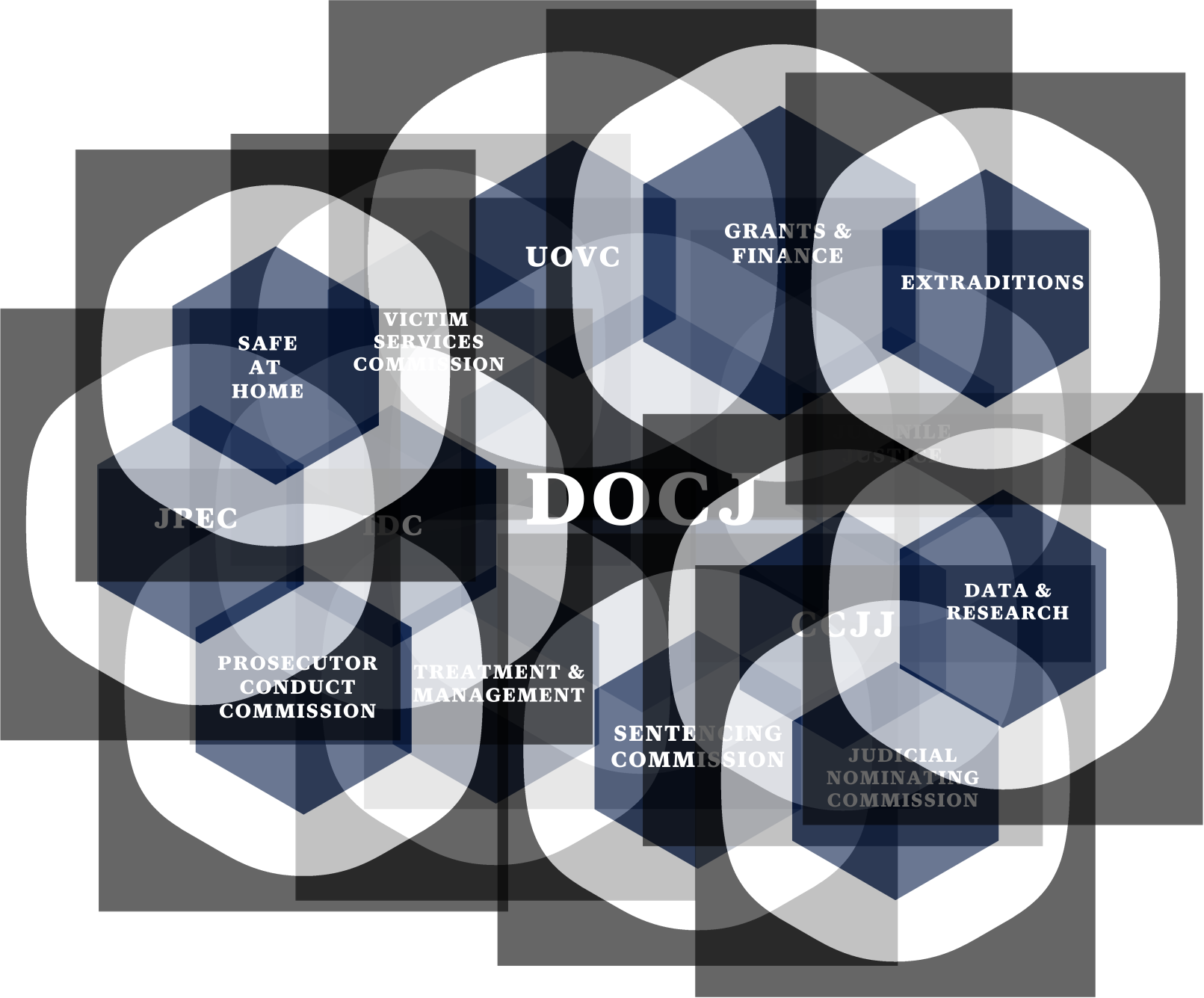
Created in 1983 and recodified in 2026, the Department of Criminal Justice (DOCJ) mission is to connect and collaborate with system partners on criminal and juvenile justice policy with the goal of reducing crime and delinquency in Utah. The Department gathers research and data, administers justice grants, and oversees stakeholder boards and commissions - including the Commission on Criminal and Juvenile Justice - to ensure current and proposed policies are based on sound data and input from all perspectives. The Department is staffed by various experts in their respective fields who assist the Department in fulfilling its duties, while leading and participating in more than 20 commissions, boards, and task forces across the justice system.
Vision
We envision a justice system that is unified across all branches and level of government which:
- Serves the community and instills public confidence and support.
- Ensures the safety and security of all citizens, provides assistance for victims, and affords a just process for those accused of violating the law.
- Is founded on principles of respect for diversity, timely and equal access to services, and a comprehensive approach to criminal and juvenile justice that includes prevention and treatment.
Mission
Our mission is to connect and collaborate with system partners on criminal and juvenile justice policy with the goal of reducing crime and delinquency in Utah.
By delivering an objective and wide-ranging research and grant agenda, the Commission ensures current and sought after policies rest on sound data and input from diverse perspectives.
Our Values
Collaboration
We create a productive space wherein system and community stakeholders can have dialogue and cooperation on criminal and juvenile justice policy. We share information, data, research, and expertise while acknowledging contributions from others in our work. We forge new partnerships and strengthen existing relationships to fulfill our statutory obligations.
Innovation
We collect, analyze, and identify data trends to monitor changes in policies and reveal potential gaps in the system. We adapt to meet emerging needs and continue to learn new technology to respond to the priorities of the governor, legislature, and community we serve.
Integrity
We are good stewards of resources, and we act ethically. We value commitment to excellence in the actions we take to fulfill our mission and meet statutory responsibilities. We are trustworthy, transparent, and hold ourselves accountable.
Truth
We value research. We believe a shared understanding of existing national and local data trends and analysis is critical when developing public policy. We endeavor to provide accurate information to the governor, legislature, system partners, and the general public.
2026- 2028 Strategic Plan
In 2023, DOCJ began a strategic planning process to identify strengths, challenges, gaps, and opportunities within the agency. Based on the agency assessment findings, strategic goals and objectives were developed. It is the hope of our agency to implement this strategic plan on an ongoing basis where it is reviewed often, integrated into our daily operations, and actively guides our decision making. In 2025 and 2026 an updated survey was sent out to staff and recommendations were incorporated into this update.
Our Team
We are an office with diverse experience working together to create a better criminal and juvenile justice system for all!
Our staff come from various educational backgrounds with a wide range of experiences to support the Department in fulfilling its statutory duties and obligations set forth by the governor and legislature.
CCJJ Commission Members
The Commission on Criminal and Juvenile Justice which DOCJ staffs, consist of nineteen statutorily delegated and appointed members representing all facets of the criminal and juvenile justice system including judges, prosecutors, defense attorneys, legislators, victim representatives, law enforcement, treatment specialists, corrections, parole authorities, education, and community partners.
