
January 1, 2023
DUI 2022 Annual Report
Background: The 20th Annual DUI Report to the Utah Legislature was prepared in accordance with §41-6a-511 of the Utah Code. The statute requires the Utah Commission on Criminal and Juvenile Justice to prepare an annual report of DUI related data, including the following: Data collected by the state courts to allow sentencing and enhancement decisions to be made in accordance

January 1, 2023
Criminal Justice 2022 Annual Report
Background: The criminal justice reforms that Utah passed in 2015 through H.B. 348 were the result of an extensive planning and analysis process bringing together stakeholders across the system in 2014, in consultation with the Pew Charitable Trusts’ Public Safety Performance Project and other partners through the Justice Reinvestment Initiative (JRI). The report that this group produced included many recommendations

January 1, 2023
Asset Forfeiture 2022 Report
Background: Over the last two decades, the forfeiture process in Utah has gone through various procedural changes along with changes to how funding is to be allocated and used. During the 2015 Utah General Legislative Session, Senate Bill 52 was passed creating additional reporting requirements for state and federal forfeitures. During the 2017 Utah General Legislative Session, Senate Bill 70
January 1, 2022
Report: Parolee Recidivism and Weapon Offenses 2022
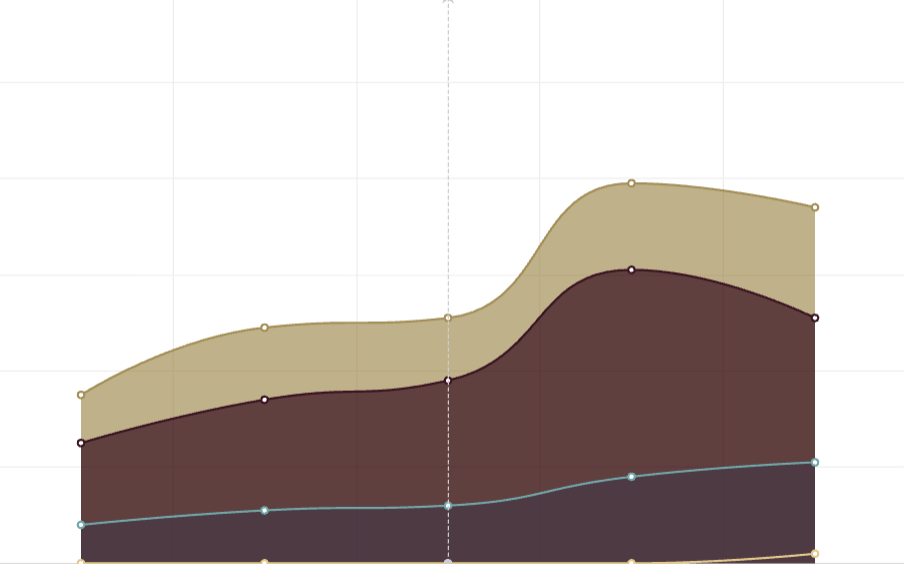
Background Similar to other states, recidivism continues to be a central measure in Utah’s criminal justice system. This site shows trends in 3-year recidivism rates for individuals that served time in prison on a leading felony weapon offense that were released on parole between 2014 and 2018. Four types of recidivism rates are included: 1) any return to prison 2) a return based on one
January 1, 2022
Report: Justice Reform and Crime Rates 2022
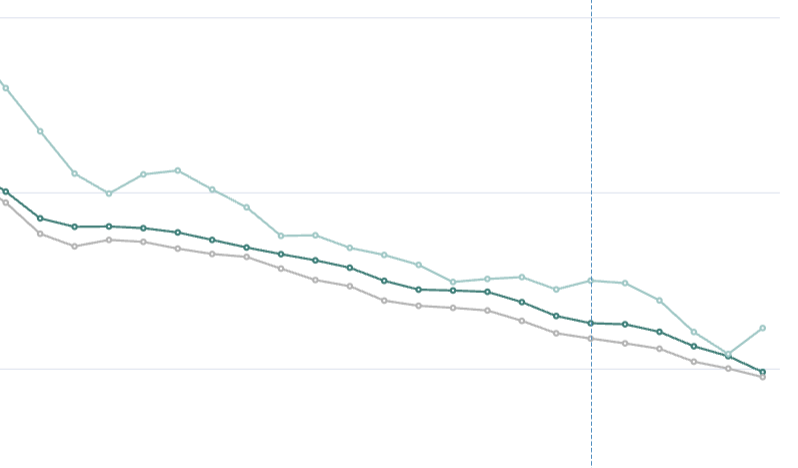
Overview: Since the early 2000’s, 40 US states have passed criminal justice reform legislation, often formally called the Justice Reinvestment Initiative (JRI). These reforms, while varying by state, aim to improve system performance while controlling costs. Research Question: Critics of justice reform initiatives often argue that the “softer” policies in these reforms may negatively impact public safety, with recent concerns
January 1, 2022
Report: Nonjudicial Adjustments Juvenile Financial Sanctions 2022
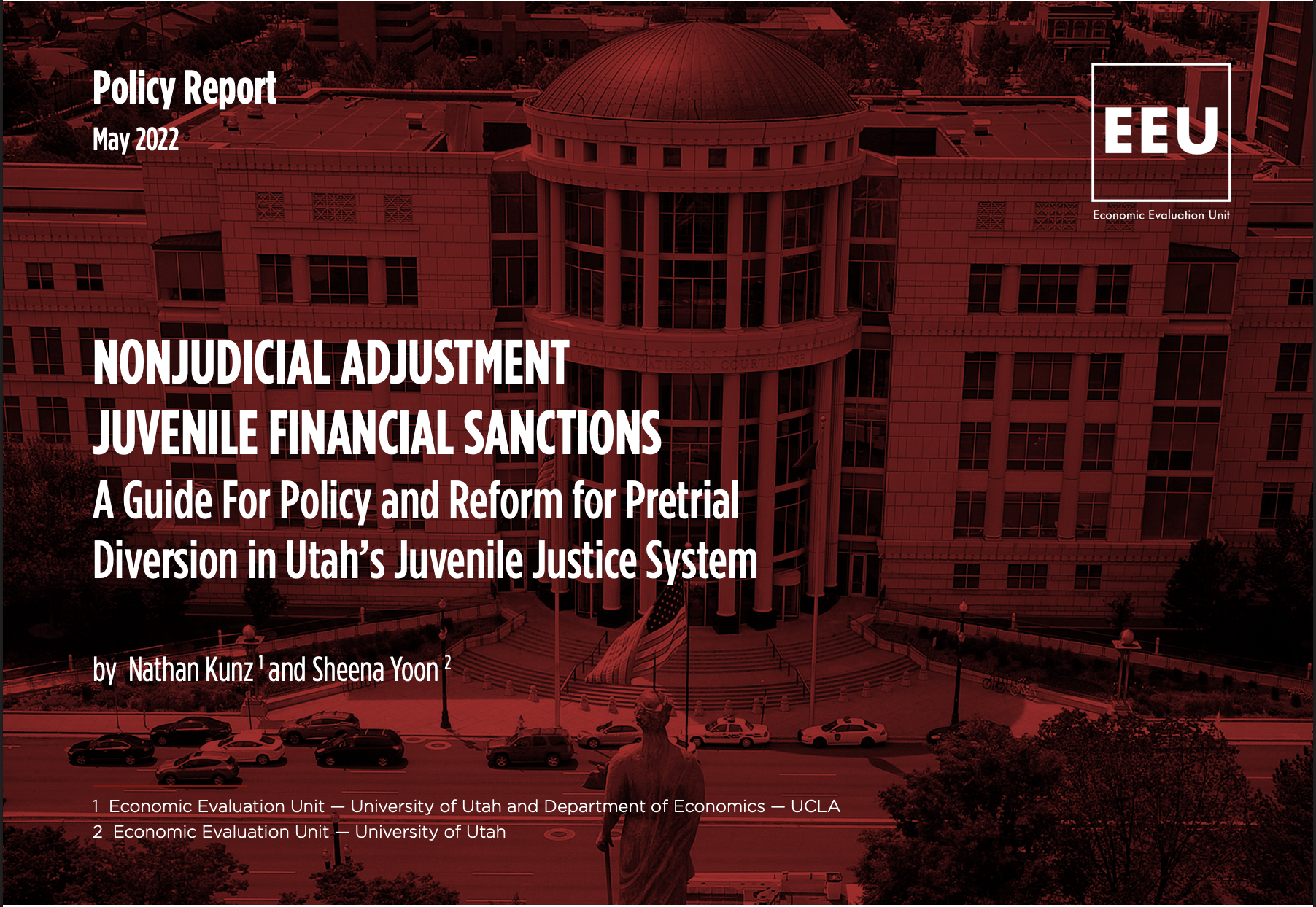
The work of the Utah Juvenile Justice Working Group laid the foundation for research-based, data-driven policy changes. Moving forward, the state could benefit from making efforts to: 1) understand and adopt research-based approaches to generate positive outcomes for youths diverted from a petition via an NJA, and 2) ensure that NJA practices are implemented with substantial fidelity and quality. As
January 1, 2022
Dashboard: Juvenile Non-Judicial Adjustments in Utah 2022
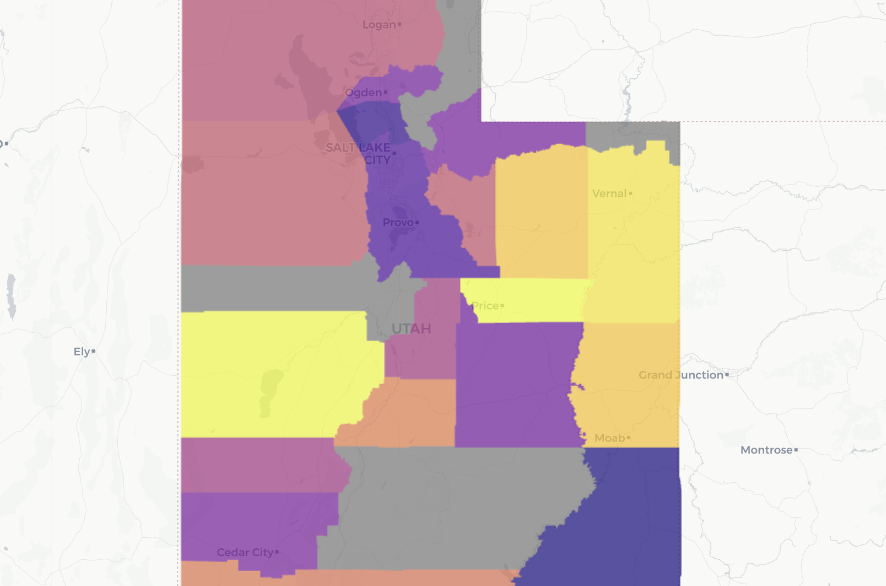
This data dashboard summarizes the key empirical findings from the full report, Nonjudicial Adjustments Juvenile Financial Sanctions: A Guide for Policy and Reform for Pretrial Diversion in Utah’s Juvenile Justice System.Explore the dashboard:NJA Dashboard▸Utah’s NJA ProcessJuvenile justice reform policies in 2017 included criteria for offering youths nonjudicial adjustments (NJA). NJAs are agreements between a youth, their parent or guardian, and

January 1, 2022
Juvenile Justice 2022 Annual Report
This sixth annual report provides an update on juvenile justice reform policies that were passed in Fiscal Year (FY) 2017 and subsequent years. Policy changes focused on preventing deeper involvement in the juvenile justice system for lower level youths, protecting the community by focusing system resources on youths who pose the highest risk to public safety, and improving outcomes through

January 1, 2022
Report: Utah Youth to Adult Offending Pathway Study 2022
Like many other states, Utah invests substantial resources in its juvenile justice system to address delinquent behavior. The goal of these efforts is to address and correct delinquent behavior among youth to prevent further criminal behavior as they mature into adults. Up to this point, Utah has lacked a mechanism for determining the share of juvenile justice-involved youth that reaches
January 1, 2022
DUI 2021 Annual Report
Background: The 19th Annual DUI Report to the Utah Legislature was prepared in accordance with §41-6a-511 of the Utah Code. The statute requires the Utah Commission on Criminal and Juvenile Justice to prepare an annual report of DUI related data, including the following: Data collected by the state courts to allow sentencing and enhancement decisions to be made in accordance