September 17, 2026
2026 Utah Prison Population Projections
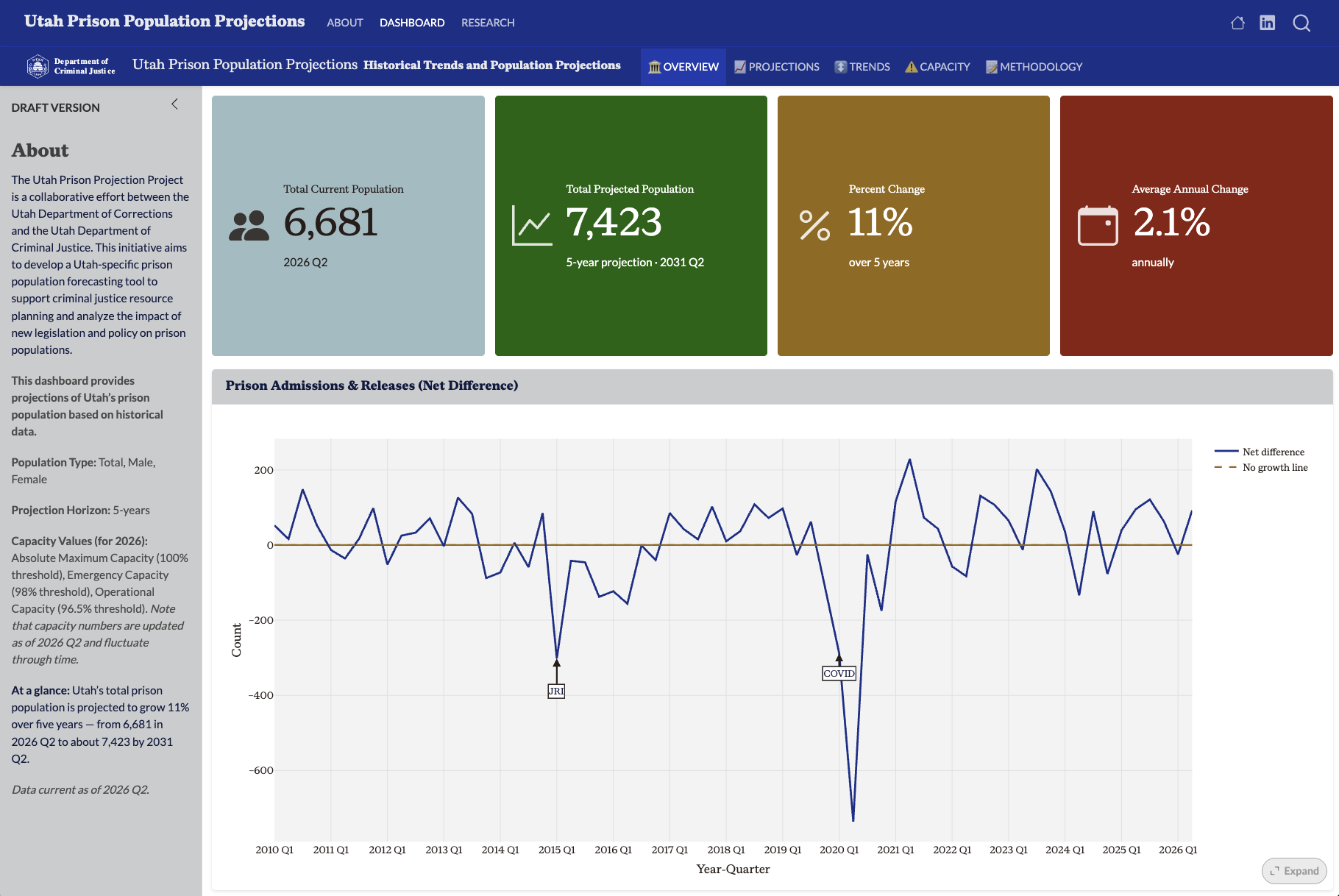
UPPP 2026 forecast update Utah Prison Projections Project 2026 forecast update Utah’s prison population reached 6,681 in 2026 Q2. The updated five-year forecast projects about 7,423 by 2031 Q2, an average of 2.1% growth per year. Forecast vintage2026 annual update Data through2026 Q2 Projection horizon2031 Q2 The Utah Prison Projection Project is a collaboration between the Utah Department of Corrections

July 8, 2026
Research Highlight: Juvenile Justice Risk Level and Response
Juvenile Justice System Risk Level and Response Risk in the Juvenile Justice System is defined as the risk to reoffend — or the risk of repeating similar or more serious behavior. When youth are brought to Juvenile Court or Juvenile Justice and Youth Services (JJYS), they are assessed using a validated risk (or risk/need) assessment (PSRA or PRA). Other youth-serving
May 19, 2026
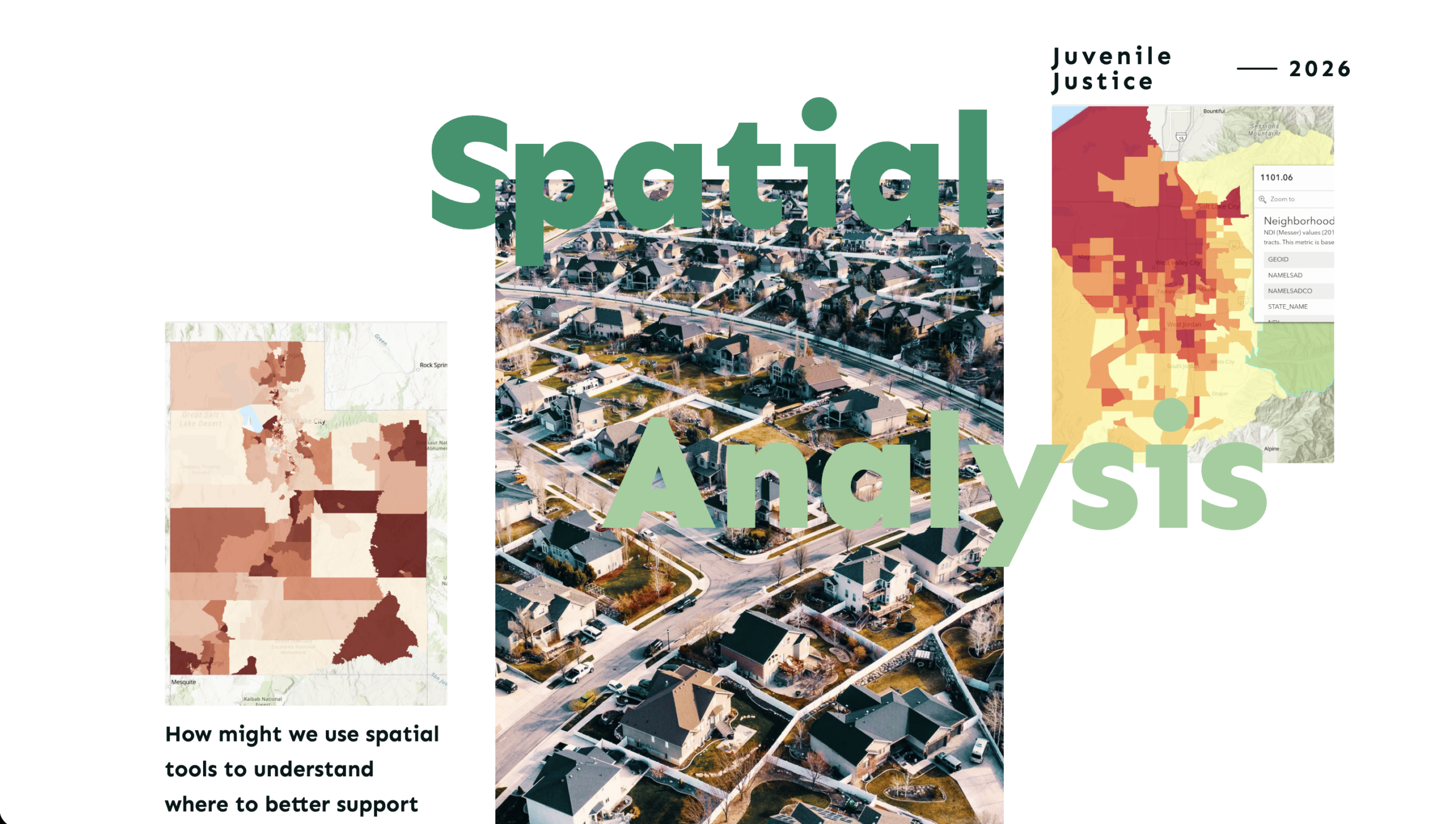
Juvenile Justice Spatial Project
How might we use spatial tools to better understand where to support youth and the challenges they face in their communities? How can we use these tools to work with the communities? We are using geospatial data and analysis tools to build a compass 🧭 for juvenile justice policy. We believe spatial data can be used as a community asset.

January 1, 2026
Habitual Offenders (SB213) Preliminary Evaluation: Community Supervision 2025
Overview: This report evaluates the characteristics and outcomes of individuals under AP&P supervision that are classified as habitual offenders, as defined by SB213. Senate Bill 213 (SB213) classifies individuals with six or more felony convictions within the past five years as habitual offenders. This report examines the characteristics and outcomes of habitual offenders under AP&P supervision using data from the

January 1, 2026
Utah Prison Projections 2025
The Utah Prison Projection Project (UPPP) is a collaborative effort between the Utah Department of Corrections (UDC) and the Commission on Criminal and Juvenile Justice (CCJJ). This initiative aims to develop a Utah-specific prison population forecasting tool to support criminal justice resource planning and analyze the impact of new legislation and policy on prison populations.

January 1, 2026
Research Snapshot: Wasatch Front Spatial Juvenile Justice 2025
Policy zones identify neighborhoods with the greatest opportunity for impact on youth outcomes. We analyzed all 751 Utah neighborhoods and identified the top 100 where strategic investment will help the most young people. These are opportunity neighborhoods – places where coordinated support can significantly improve outcomes for youth, their families, and the communities they live in. 🏘️ See which neighborhoods
January 1, 2022
Report: Parolee Recidivism and Weapon Offenses 2022
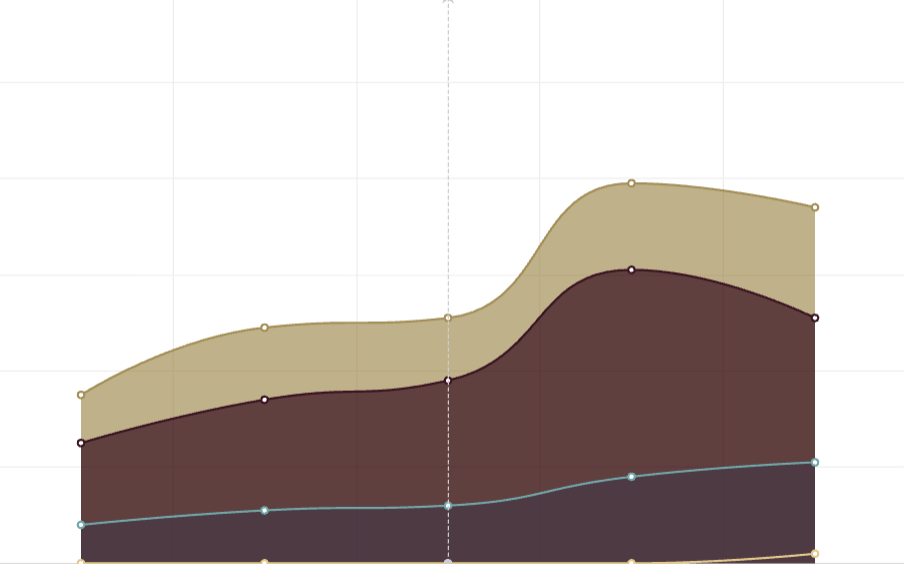
Background Similar to other states, recidivism continues to be a central measure in Utah’s criminal justice system. This site shows trends in 3-year recidivism rates for individuals that served time in prison on a leading felony weapon offense that were released on parole between 2014 and 2018. Four types of recidivism rates are included: 1) any return to prison 2) a return based on one
January 1, 2022
Report: Justice Reform and Crime Rates 2022
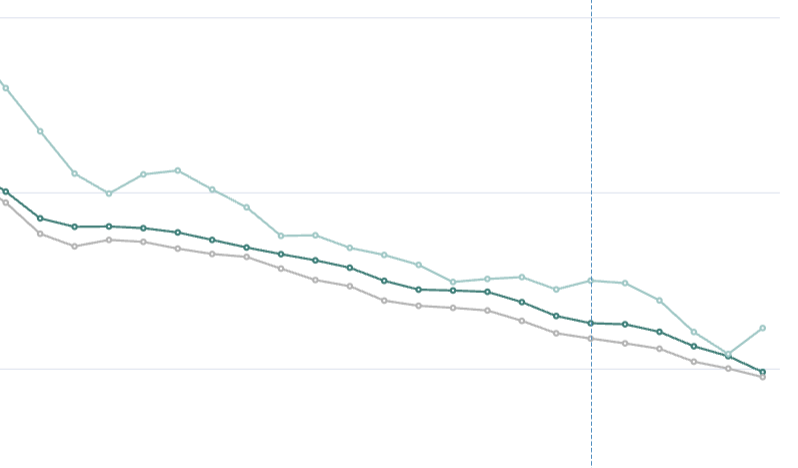
Overview: Since the early 2000’s, 40 US states have passed criminal justice reform legislation, often formally called the Justice Reinvestment Initiative (JRI). These reforms, while varying by state, aim to improve system performance while controlling costs. Research Question: Critics of justice reform initiatives often argue that the “softer” policies in these reforms may negatively impact public safety, with recent concerns
January 1, 2022
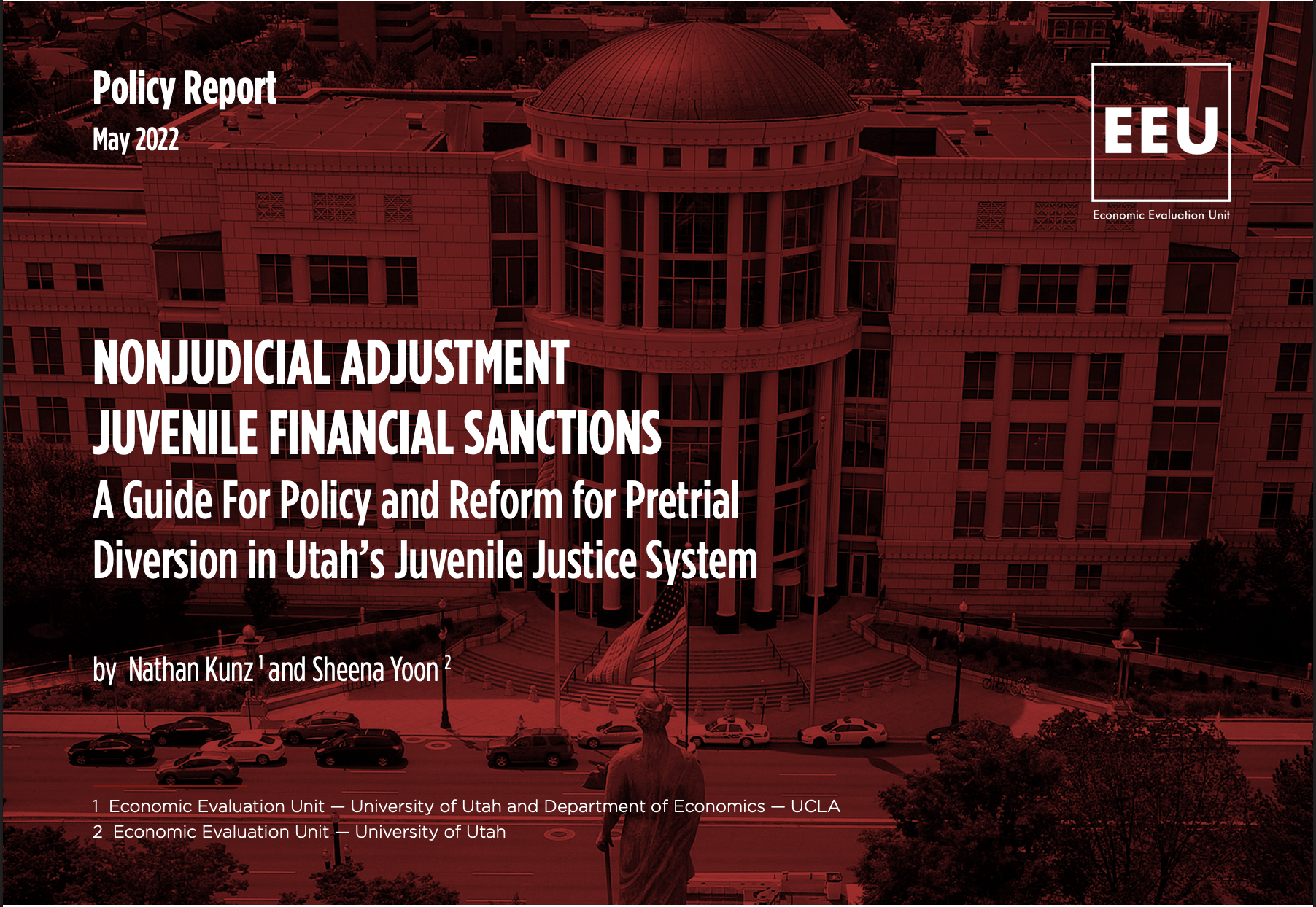
Report: Nonjudicial Adjustments Juvenile Financial Sanctions 2022
The work of the Utah Juvenile Justice Working Group laid the foundation for research-based, data-driven policy changes. Moving forward, the state could benefit from making efforts to: 1) understand and adopt research-based approaches to generate positive outcomes for youths diverted from a petition via an NJA, and 2) ensure that NJA practices are implemented with substantial fidelity and quality. As
January 1, 2022
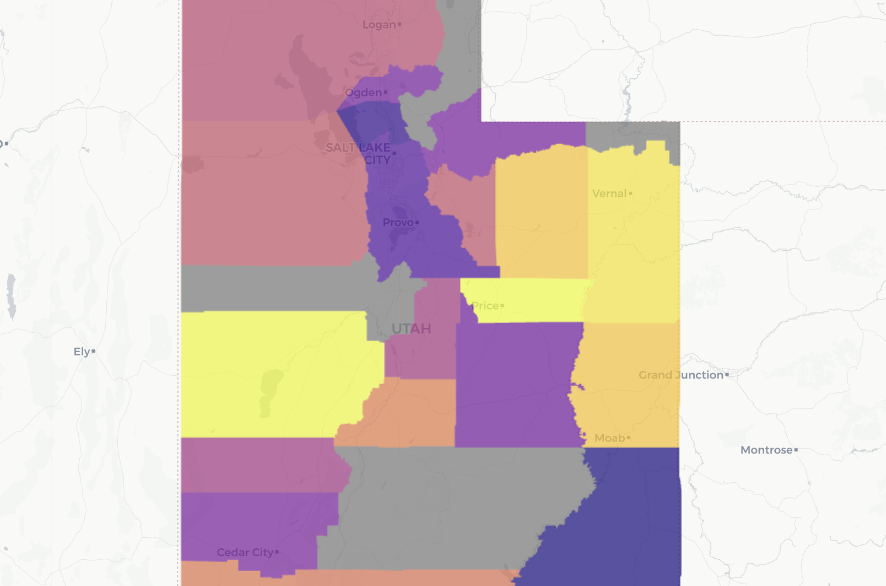
Dashboard: Juvenile Non-Judicial Adjustments in Utah 2022
This data dashboard summarizes the key empirical findings from the full report, Nonjudicial Adjustments Juvenile Financial Sanctions: A Guide for Policy and Reform for Pretrial Diversion in Utah’s Juvenile Justice System.Explore the dashboard:NJA Dashboard▸Utah’s NJA ProcessJuvenile justice reform policies in 2017 included criteria for offering youths nonjudicial adjustments (NJA). NJAs are agreements between a youth, their parent or guardian, and