October 23, 2026

Prosecutor Conduct Commission 2026 Annual Report
Background Senate Bill 318 of the 2025 General Session created the Prosecutor Conduct Commission (PCC). The PCC is housed within the Department of Criminal Justice (formerly the Commission on Criminal and Juvenile Justice; CCJJ). The PCC is tasked by law to receive, initiate, investigate, or hear complaints regarding potential professional misconduct on the part of a prosecutor during the prosecution

September 30, 2026
Juvenile Justice 2026 Annual Report
This tenth annual report provides an update on juvenile justice policies that were passed in 2017 and subsequent years. The data represented in this report reflects Fiscal Year (FY) 2026.▸Highlights from this year’s report: Youth are being referred to Utah’s juvenile court at a rate of 3.39 per 100 youths in FY 2026. Overall, there were 14,273 referrals to the
September 17, 2026
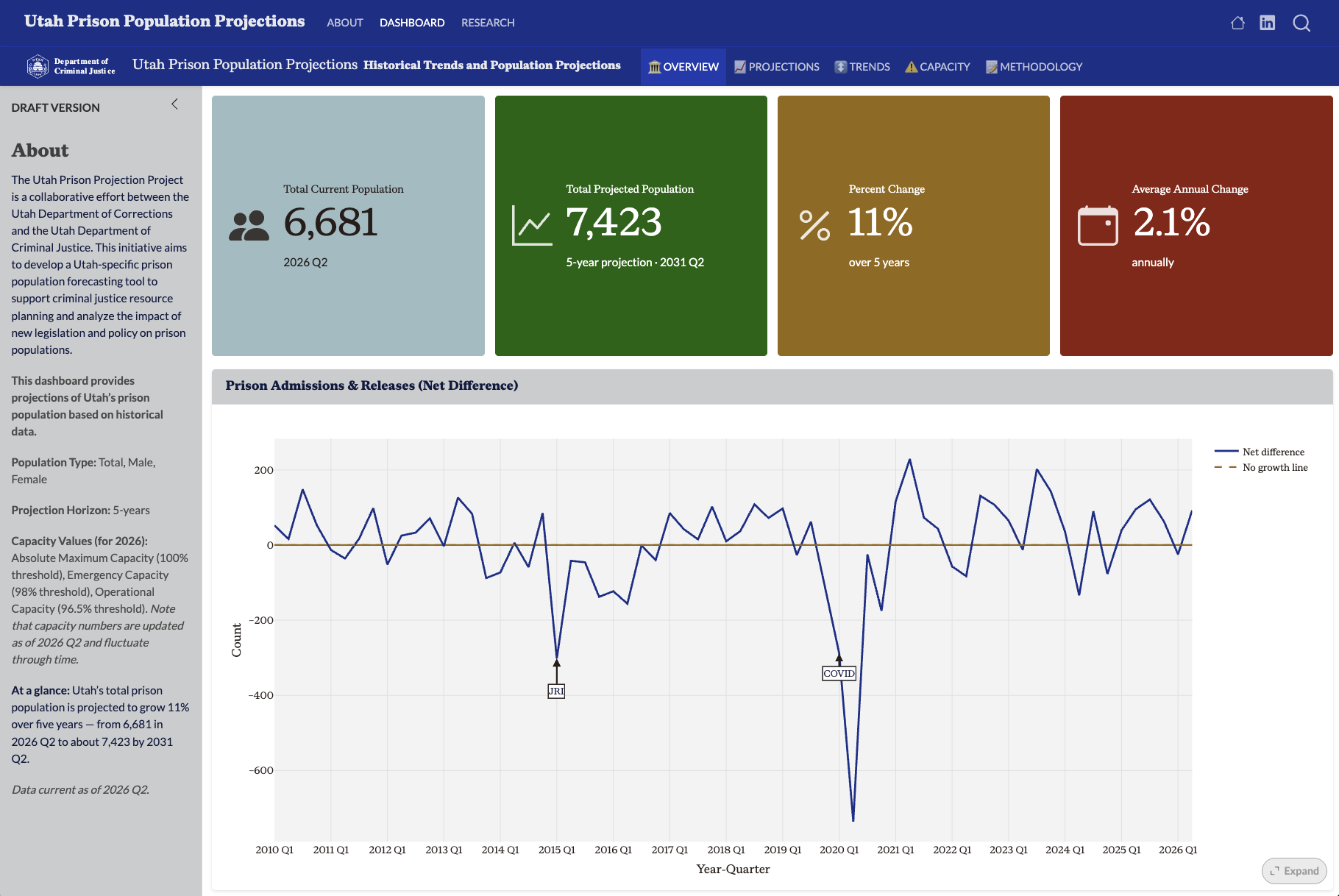
2026 Utah Prison Population Projections
UPPP 2026 forecast update Utah Prison Projections Project 2026 forecast update Utah’s prison population reached 6,681 in 2026 Q2. The updated five-year forecast projects about 7,423 by 2031 Q2, an average of 2.1% growth per year. Forecast vintage2026 annual update Data through2026 Q2 Projection horizon2031 Q2 The Utah Prison Projection Project is a collaboration between the Utah Department of Corrections

July 8, 2026
Research Highlight: Juvenile Justice Risk Level and Response
Juvenile Justice System Risk Level and Response Risk in the Juvenile Justice System is defined as the risk to reoffend — or the risk of repeating similar or more serious behavior. When youth are brought to Juvenile Court or Juvenile Justice and Youth Services (JJYS), they are assessed using a validated risk (or risk/need) assessment (PSRA or PRA). Other youth-serving

June 24, 2026
Asset Forfeiture 2025 Report
Background: Over the last two decades, the forfeiture process in Utah has gone through various procedural changes along with changes to how funding is to be allocated and used. During the 2015 Utah General Legislative Session, Senate Bill 52 was passed creating additional reporting requirements for state and federal forfeitures. During the 2017 Utah General Legislative Session, Senate Bill 70
May 19, 2026
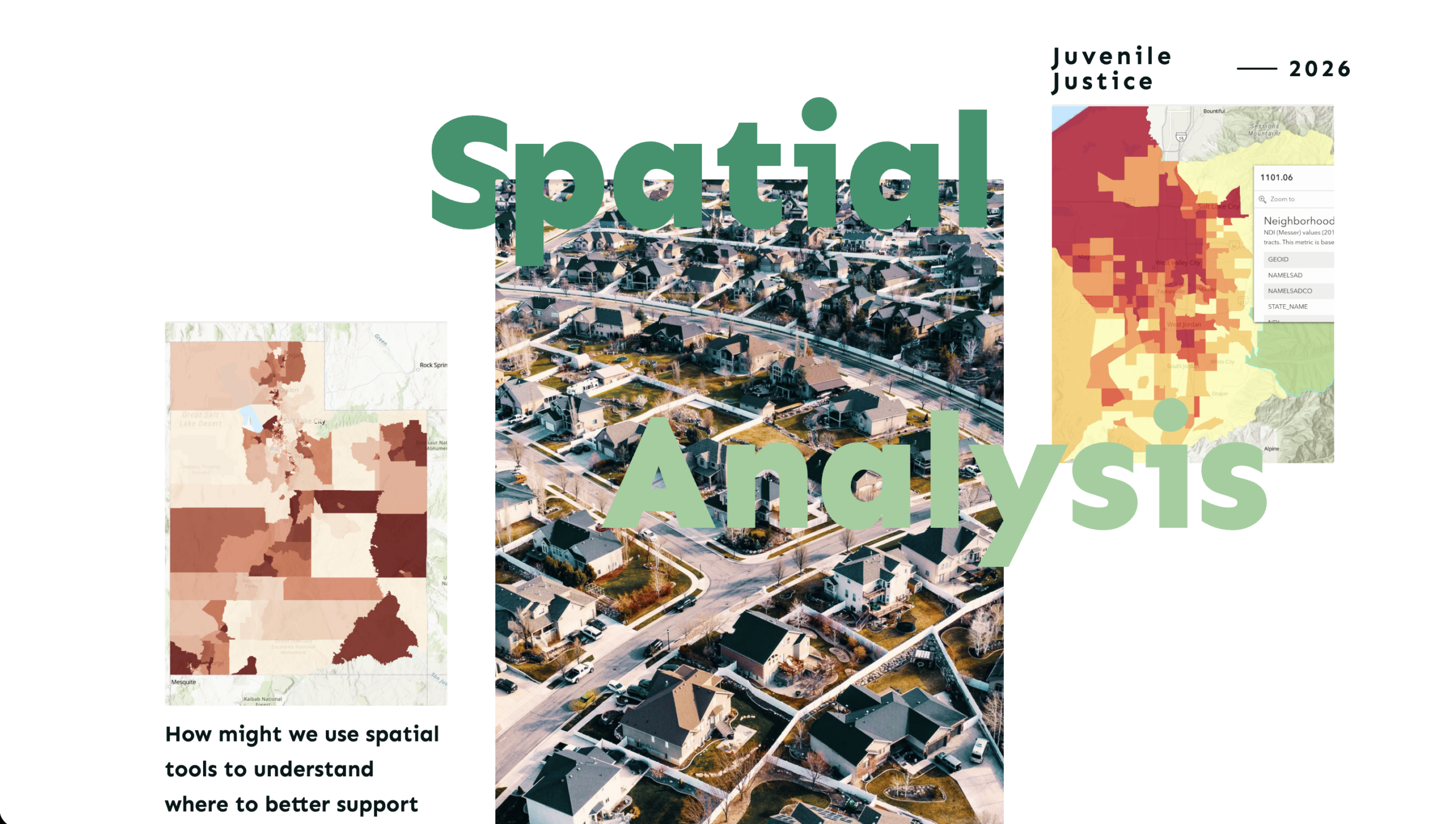
Juvenile Justice Spatial Project
How might we use spatial tools to better understand where to support youth and the challenges they face in their communities? How can we use these tools to work with the communities? We are using geospatial data and analysis tools to build a compass 🧭 for juvenile justice policy. We believe spatial data can be used as a community asset.
April 1, 2026
Community Highlight: Uplift Midvale
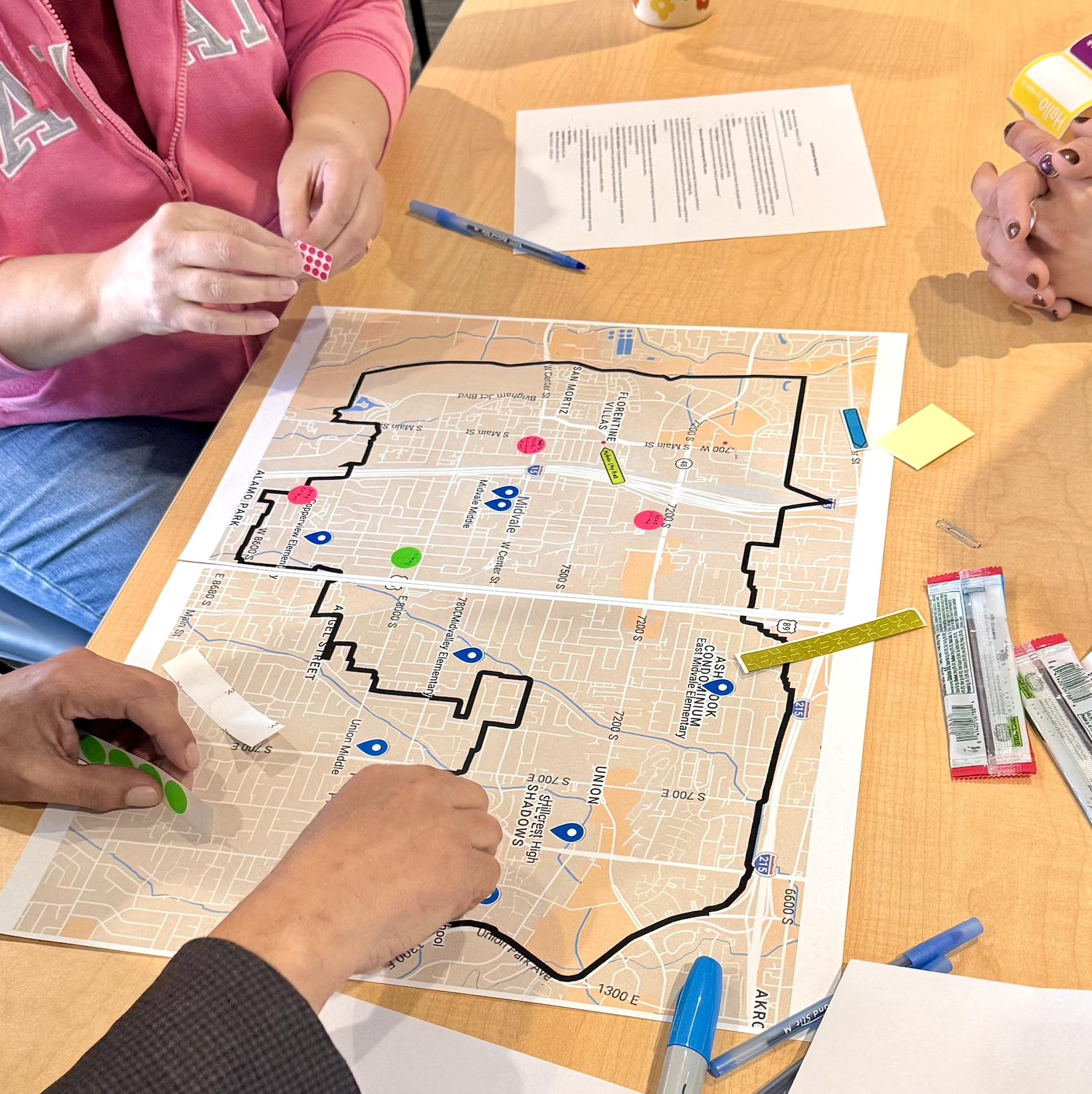
Uplift Midvale and DOCJ Community Engagement Kuuai Aiono and Tahsi Aiono with Uplift Midvale Midvale City, Utah, sits in the heart of Salt Lake County, offering suburban access, a strong sense of community, and a small-town feel. There, Uplift Midvale, a community coalition formed in 2022, is dedicated to supporting and improving the lives of Midvale’s Youth. Uplift Midvale has

January 1, 2026
Habitual Offenders (SB213) Preliminary Evaluation: Community Supervision 2025
Overview: This report evaluates the characteristics and outcomes of individuals under AP&P supervision that are classified as habitual offenders, as defined by SB213. Senate Bill 213 (SB213) classifies individuals with six or more felony convictions within the past five years as habitual offenders. This report examines the characteristics and outcomes of habitual offenders under AP&P supervision using data from the

January 1, 2026
Utah Prison Projections 2025
The Utah Prison Projection Project (UPPP) is a collaborative effort between the Utah Department of Corrections (UDC) and the Commission on Criminal and Juvenile Justice (CCJJ). This initiative aims to develop a Utah-specific prison population forecasting tool to support criminal justice resource planning and analyze the impact of new legislation and policy on prison populations.

January 1, 2026
Research Snapshot: Wasatch Front Spatial Juvenile Justice 2025
Policy zones identify neighborhoods with the greatest opportunity for impact on youth outcomes. We analyzed all 751 Utah neighborhoods and identified the top 100 where strategic investment will help the most young people. These are opportunity neighborhoods – places where coordinated support can significantly improve outcomes for youth, their families, and the communities they live in. 🏘️ See which neighborhoods